

Branding in the Age of AI Search: Why Brands Need AEO to Stay Visible in 2026?
Recent Posts
Share this article:
Google is no longer the only search engine. Sure, there was a time when ranking on the web meant your brand ranked on Google. Having said that, times have changed. Today, even you, like millions of people,e go to ChatGPT, Gemini, Claude, Perplexity, and AI assistants for deciding anything, and AI assistants don’t just rank websites, they decide which brands deserve to be mentioned in the answer itself.
Imagine investing years into building your website, you rank on Google, you publish blogs, you run ads, your SEO is solid, and then someone asks Chat GPT who the best branding agencies are, and your competitor appears, not your brand. Not because your work is not good but because AI couldn’t confidently recognise, understand, or cite your brand. So, the question is not whether your website ranks or not, but whether AI knows your brand well enough to recommend it. That is what Answer Engine Optimisation (AEO) has become, one of the fundamental shifts in how information is retrieved, interpreted, and recommended.
The brands that answer the question successfully will own disproportionate visibility in 2026 and beyond. Because in the age of AI search, your biggest competitor is not necessarily the brand ranking above you on Google. Let’s find out how as a brand in 2,026 you can rank and stay relevant on the ranking pages!
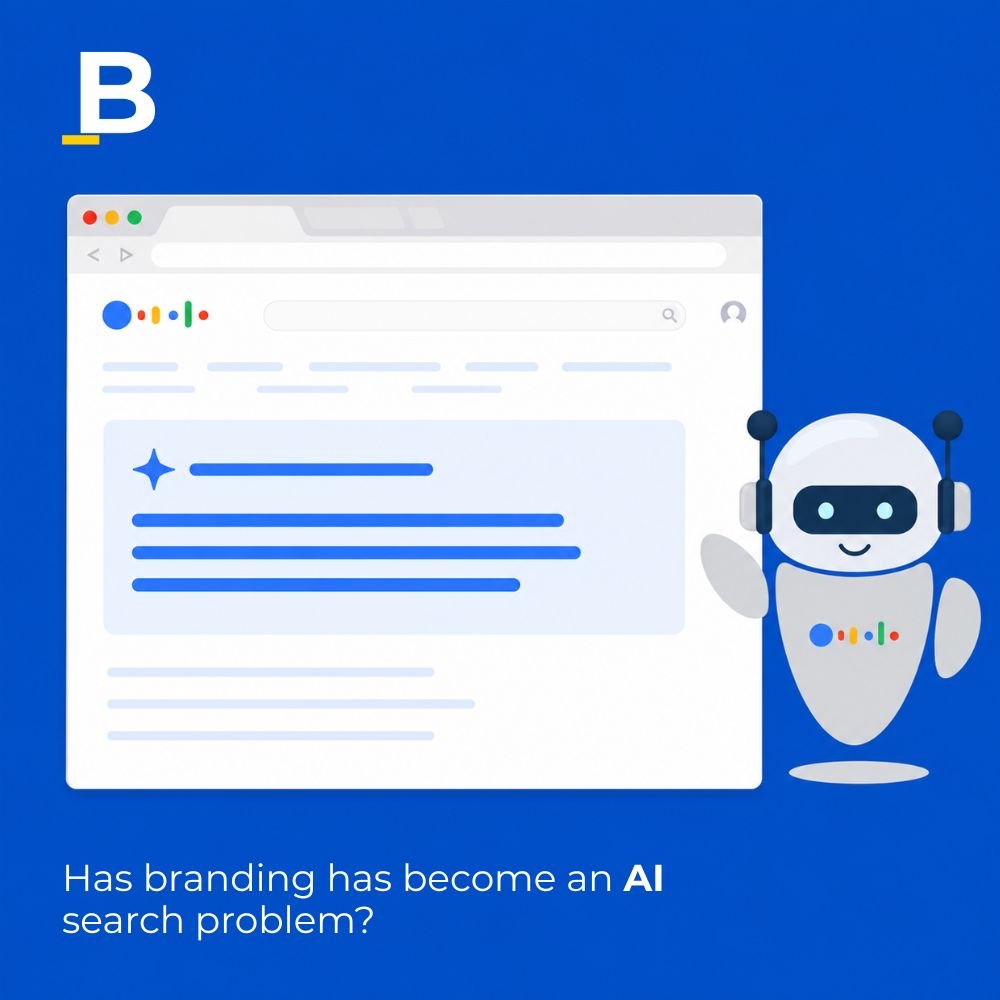
Has branding has become an AI search problem?
“What is the best CRM for startups?” “Which branding agency specialises in coffee brands?, “What are the most sustainable lighting companies?” Consumers are replacing search queries with conversations and instead of comparing multiple websites, they ask AI assistants direct questions. This is what represents a dramatic shift in digital visibility. In fact, research from multiple industry analyses reflects that AI-generated search experiences have become a major contributor to the measurable decline in click-through rates for many informational searches.
For years, branding focused on perception; it shaped how people felt about a company through its identity, messaging, design, and customer experience. While SEO focuses on discoverability with optimizing webpages to rank higher for keywords and attract organic traffic. But today in 2026, for brands to rank on Google, these two disciplines are converging. So,even though branding was designed primarily for human audiences with logos, visual identity, storytelling, and advertising shaping emotional perception, today every digital asset contributes to how AI understands your business.
Here’s how branding has become an AI search problem:
- Does your website consistently describe what your company does?
- Are your services clearly categorised?
- Is your expertise reinforced by external publications?
- Are your founders recognised as thought leaders?
- Do trusted websites reference your work?
In addition to these, the shift towards an AI-first discovery has impacted every industry, whether you are branding for software, selecting healthcare providers, comparing financial services, or even evaluating the best branding agencies, AI assistants are increasingly influencing the earliest stages of decision-making. This means, for businesses visibility is just just about search rankings but about if AI systems recognise your brand as authoritative, trustworthy, and contextually relevant.
What does AEO actually mean for brands?
Before everything, AEO is not simply “SEO for AI”. For years, Search Engine Optimisation (SEO) was built around a simple objective of helping search engines find, understand, and rank your webpages for relevant keywords. However, with AI that objective has fundamentally changed. SEO focuses on making your webpages discoverable, whereas AEO focuses on making brands understandable, trustworthy, and reference-worthy.
Moverover, how consumers search has changed and instead of typing fragmented keywords like “best branding agency India” or “packaging design near me”, a more natural-language is more preferred. So, when an AI model generates an answer, it synthesizes information from multiple sources, compares claims, identifies patterns, and evaluates confidence even before deciding which brands deserve to be mentioned. Rather than presenting ten blue links, some of the strongest AI-powered search engine signals include:
- Entity recognition
- Topical authority
- Brand mentions and citations
- Structured data and schema markup
- Expertise and E-E-A-T
- Consistent brand positioning
What this means is that if your website describes you as a branding agency, LinkedIn calls you a marketing consultant, directories categorise you as a design studio, and press articles describe something entirely different, then AI is receiving conflicting signals.
Why does AI search reward strong brands?
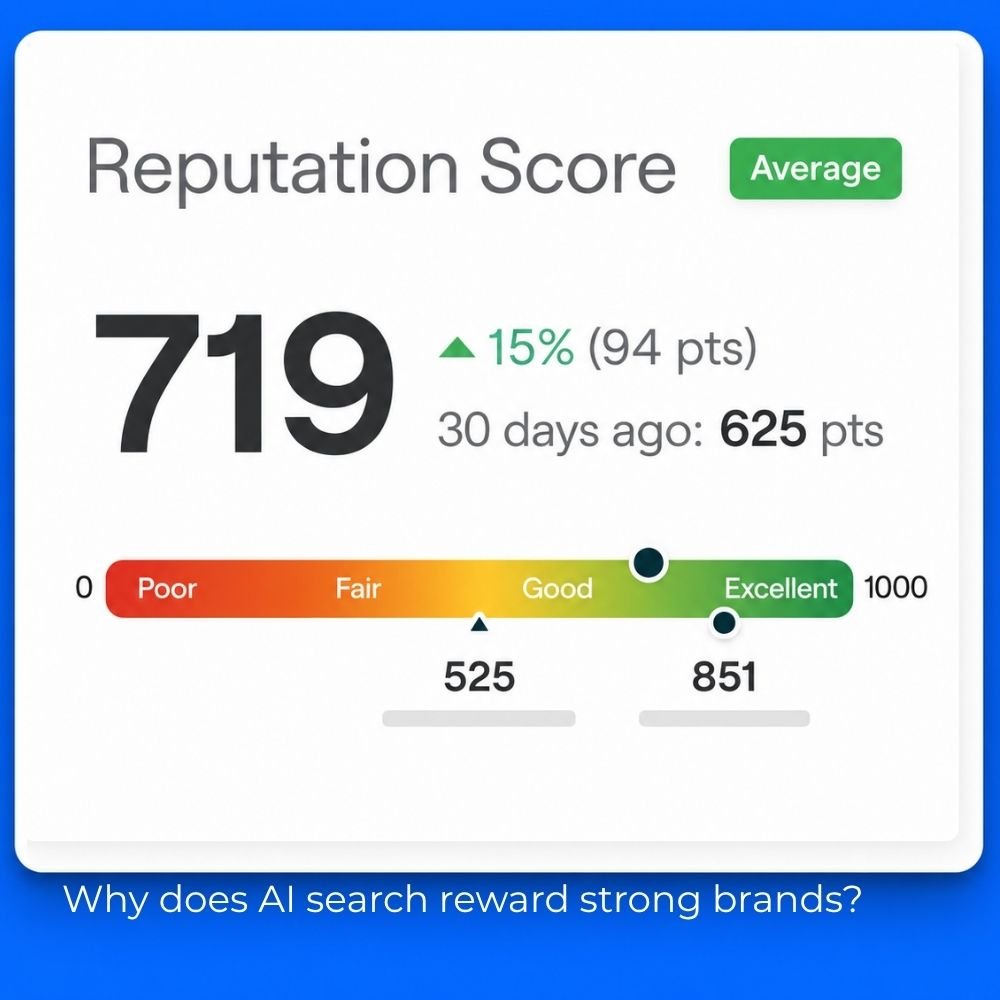
One of AI’s biggest challenges is resolving ambiguity. So, if a company describes itself differently across various platforms, AI has difficulty understanding its core identity. Even though visibility was a major function of optimisation, and brands that mastered keywords, backlinks, and technical SEO could compete for top positions in search results.
However, today visibility is increasingly earned through credibility rather than optimization alone which makes AI to receive a concise, synthesised answer that mentions only a handful of companies. This is what forces AI systems to make a judgment call.
Here’s what all AEO considers to reward strong search back:
- Which brands are credible enough to recommend?
- Which agencies are repeatedly mentioned in reputable publications?
- Which firms have published authoritative insights on hospitality branding?
- Which brands are referred by industry experts, podcasts, conferences, or research?
- Which agencies have documented case studies with measurable outcomes?
Weak brands, by comparison, often rely almost entirely on their own website to communicate their expertise. For example, a niche cybersecurity firm that publishes original threat intelligence, speaks at industry conferences, contributes to open-source projects, and is regularly cited by respected technology publications may be surfaced by AI ahead of a larger competitor that primarily invests in advertising.
This shift where AI values expertise that is consistently reinforced by external sources reflects a broader shift from popularity metrics to credibility metrics.
How did the rise of citation over clicks happen?
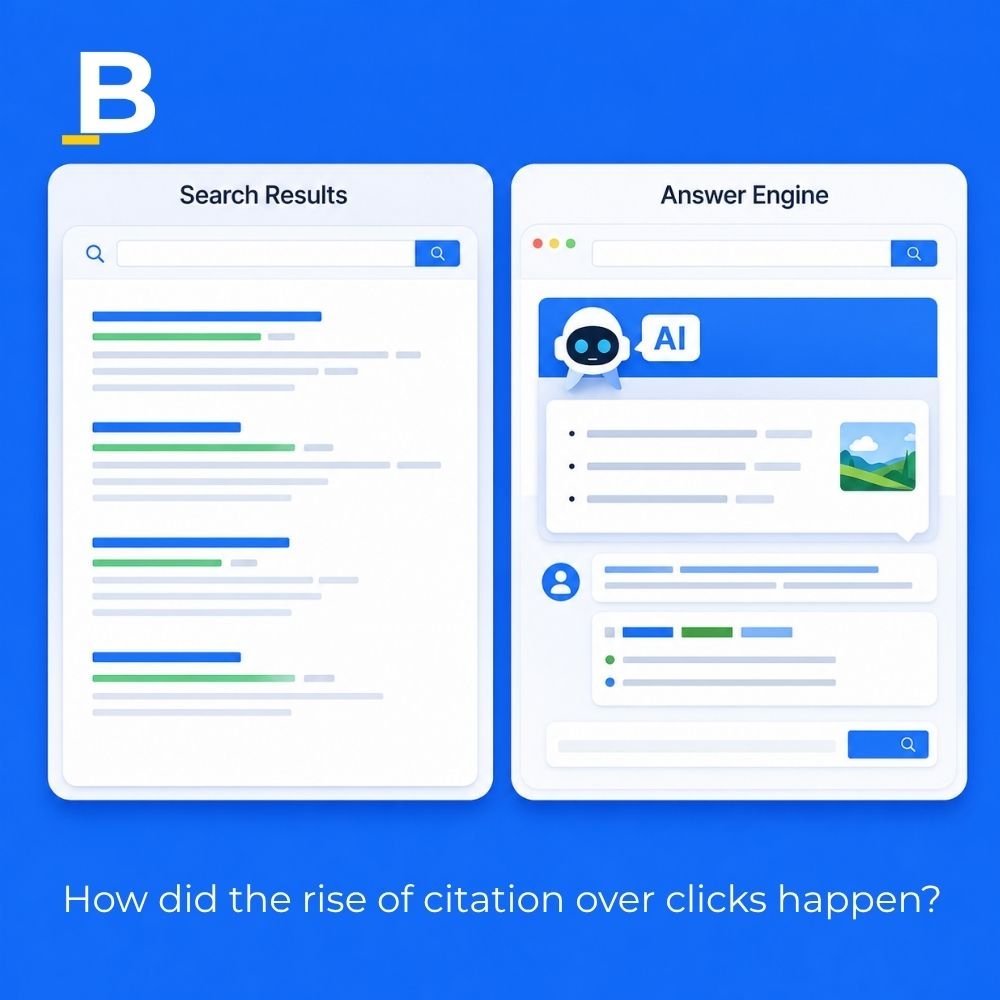
Ever since digital marketing has revolved around “the click”, where every SEO strategy, content calendar, advertising campaigns, and website optimisation effort was designed to answer how they get users to click their link. Traditional search engines acted as gateways to information.
They indexed billions of webpages and ranked them according to relevance, authority, and user intent. The responsibility of evaluating those pages ultimately rested with the user, who decided which links to open. Instead of offering ten possible answers, AI evaluates hundreds of sources on the user’s behalf and generates a single response. In doing so, it determines which information and more importantly, which brands deserve to be included.
This shift changes the competitive landscape. The result is a measurable decline in clicks for many informational queries. Industry studies from firms such as SparkToro, Similarweb, and enterprise SEO platforms have consistently shown that a significant share of searches now end without a click, particularly when users are seeking definitions, comparisons, recommendations, or quick explanations.
What happens when brands ignore AEO?
For many businesses, Answer Engine Optimization (AEO) still feels like an emerging trend rather than a strategic priority. After all, if a brand ranks well on Google, generates steady organic traffic, and has a well-designed website, isn’t that enough?
The rise of AI-powered search has introduced a new layer of competition, one where visibility is determined not just by search rankings, but by whether AI systems recognize, trust, and recommend your brand. Ignoring AEO doesn’t mean your website disappears overnight. Instead, it leads to a gradual erosion of visibility, authority, and influence in the places where buying decisions are increasingly made.
Without considering how AI systems retrieve, summarize, and cite information, much of this content becomes less effective.
Content that lacks:
- Original insights
- Expert authorship
- Structured formatting
- Clear answers to user questions
- Supporting data
- Strong entity associations
Organizations that begin optimizing for AI visibility today will accumulate the trust signals, citations, entity authority, and topical relevance that AI systems increasingly rely upon. Those that wait may find themselves competing against brands whose authority has already become deeply embedded in AI-generated knowledge.
How can brands stay visible in 2026?
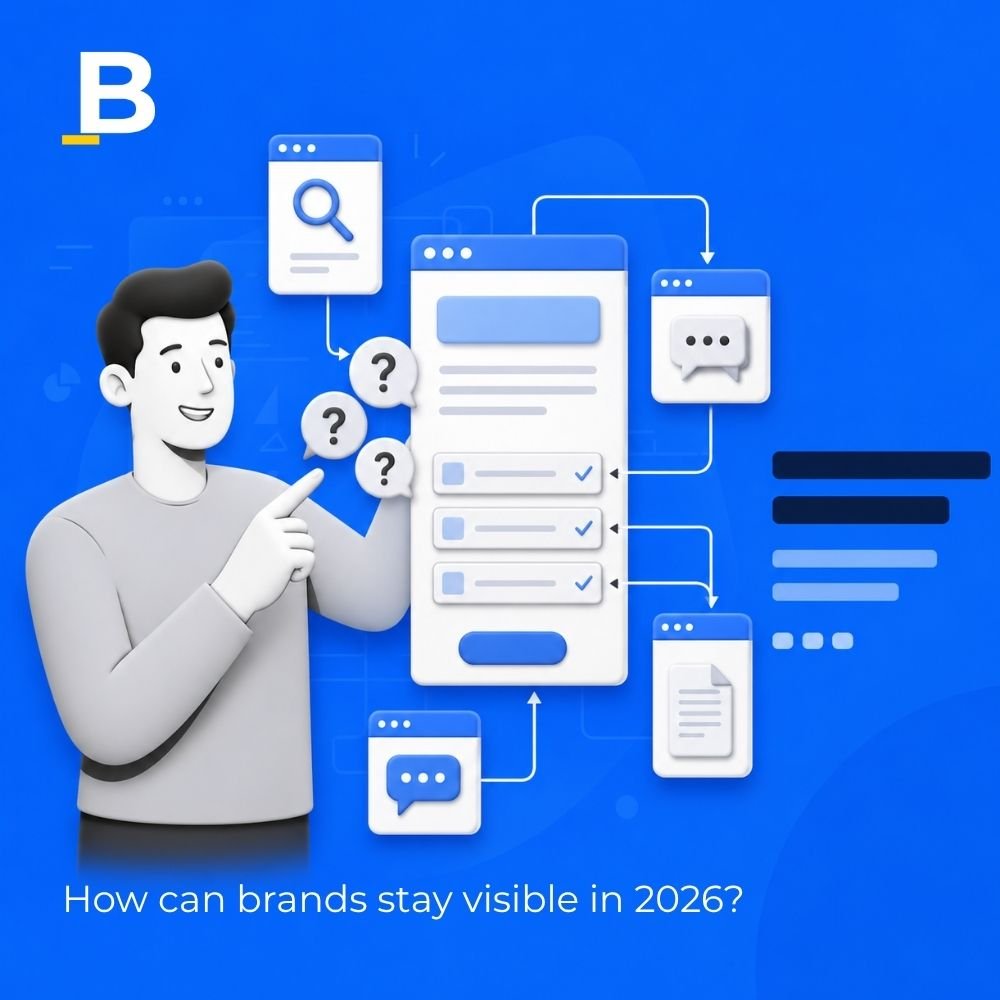
AI cannot recommend what it cannot confidently identify. The foundation of AEO is creating a clear, consistent, and machine-readable brand identity across every digital touchpoint. Your website, LinkedIn profile, Google Business Profile, industry directories, social media, press mentions, and third-party listings should all answer the same questions:
- Who are you?
- What do you do?
- Which industries do you specialize in?
- What makes you different?
- Which problems do you solve?
Inconsistencies create ambiguity. Consistency builds confidence.The clearer your digital identity, the easier it becomes for AI to associate your brand with specific topics and expertise. For brands, this means moving beyond traditional SEO and adopting a holistic strategy that combines Answer Engine Optimization (AEO), Generative Engine Optimization (GEO), entity SEO, digital PR, and thought leadership. The brands that will dominate AI search in 2026 are not necessarily those publishing the most content but those building the strongest digital reputation.
Conclusion
The future of search isn’t about finding information, it’s about finding trusted answers. As AI-powered search engines become the primary gateway to discovery, brands can no longer rely solely on traditional SEO or paid visibility. Success will increasingly depend on whether AI recognizes your expertise, trusts your authority, and chooses to cite your brand.
That shift changes how brands need to think about visibility. Logos, websites, and campaigns remain important, but they’re no longer enough. AI search rewards brands that have built authority through consistent messaging, original expertise, trusted citations, and meaningful industry recognition.
Related Posts